
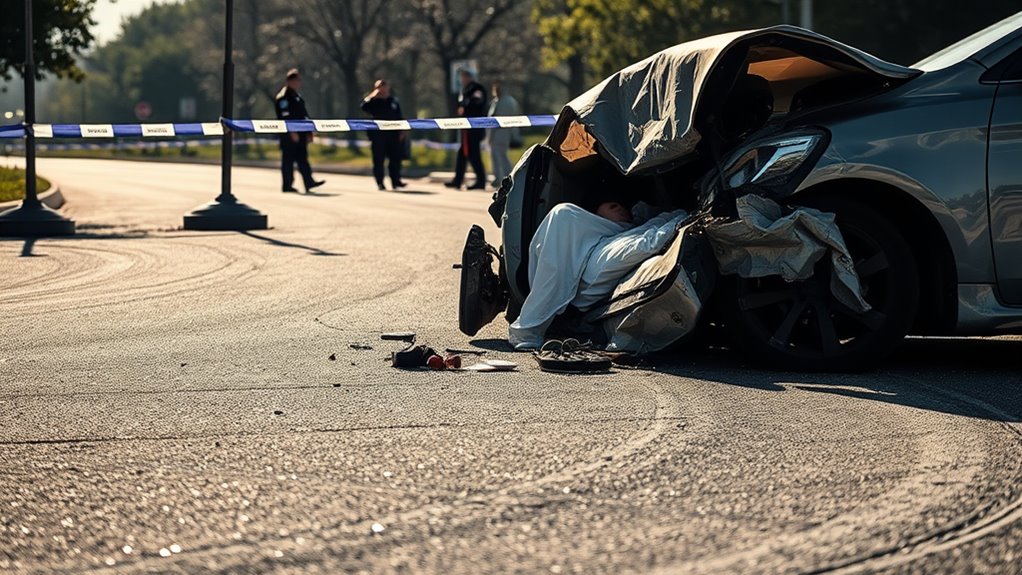
When you consider the consequences of reckless driving, it's clear why penalties are so harsh. The potential for severe injuries or fatalities not only affects the driver but also innocent victims. Legal systems impose strict fines and incarceration to deter such dangerous behavior, especially for repeat offenders or those under the influence. Understanding the rationale behind these severe consequences reveals the broader implications for public safety and individual responsibility. What factors contribute to these penalties, and how do they reflect societal values?
Reckless driving penalties can vary greatly across states, with consequences ranging from fines to incarceration. The classification of reckless driving as a misdemeanor or felony greatly influences the severity of these penalties. In most states, reckless driving is a misdemeanor, but certain circumstances, such as causing injury or death, can elevate the charge to a felony. This classification directly impacts the potential consequences a driver may face.
Inaccurate assessments of reckless driving often overlook how circumstantial factors shape penalties. For example, if a driver causes severe injuries or fatalities, charges may escalate to a felony, leading to harsher penalties. Repeat offenders face even more severe consequences, as prior convictions can lead to felony charges. Additionally, the location of the offense matters; reckless driving in school zones or construction areas typically carries more stringent penalties, reflecting the increased danger to vulnerable populations. Driving under the influence (DUI) often elevates reckless driving to a felony status, further complicating the legal landscape surrounding these charges. Furthermore, the legal process often becomes more complex when involving a traffic lawyer, who can provide specialized guidance.
Incarceration is another important factor when discussing reckless driving penalties. Depending on the state, sentences can range from one year to several years. For instance, California may impose up to three years for felony convictions involving injury, while Florida allows for up to five years. The potential for incarceration rises dramatically when reckless driving results in severe injuries or loss of life. Repeat offenders may also experience lengthened sentences, showcasing the legal system's emphasis on deterring reckless behavior.
Incarceration for reckless driving varies by state, with severe penalties for injuries and repeat offenses.
Financial penalties further illustrate the seriousness of reckless driving. Fines can range from a few hundred dollars for minor offenses to several thousand for severe cases. In states like Wisconsin, fines can reach up to $10,000 if reckless driving causes great bodily harm. Felony convictions generally incur substantial fines, reflecting the legal system's effort to impose considerable financial consequences as a deterrent. Additionally, civil proceedings may require drivers to compensate injured parties, further amplifying the financial repercussions of reckless driving. Elevated insurance premiums often follow, adding to the long-term financial burden.
Probation and community service can also be part of the penalties associated with reckless driving. Courts may impose probation instead of, or in addition to, jail time, often including conditions such as community service and attendance at driving safety courses. The specifics of these terms can vary widely by state, and repeat offenders typically face stricter conditions. An unblemished driving record may result in more lenient probation terms, showing the legal system's willingness to take mitigating factors into account.
Lastly, license suspension or revocation represents another layer of consequences. A license suspension results in a temporary loss of driving privileges, while revocation indicates a permanent loss, requiring drivers to reapply after a specified period. Felony convictions often lead to more severe license penalties, underscoring the legal system's commitment to public safety.
Ultimately, the severe penalties associated with reckless driving reflect the potential for substantial harm to others and underscore the need for responsible driving behavior.
Conclusion
To conclude, reckless driving penalties are severe because they aim to protect public safety and deter dangerous behaviors. You might think that fines alone could suffice, but imagine the devastation of a family losing a loved one in a crash caused by reckless driving. The emotional and psychological toll on victims and their families is immeasurable. Therefore, strict penalties are essential in promoting responsible driving and ensuring that such tragedies are minimized on our roads.
