

In California, the Daylighting Law now prohibits parking near crosswalks, a critical measure aimed at enhancing pedestrian safety. As traffic regulations continue to evolve across the country, it's essential for you to stay informed about other significant changes. From updated car seat laws in Colorado to hands-free driving regulations in multiple states, understanding these new laws can help you avoid fines and guarantee safer roads. What other changes should you be aware of?
Key Takeaways
- California's Daylighting Law, effective January 1, 2025, prohibits parking near crosswalks to enhance pedestrian safety and visibility.
- Colorado mandates rear-facing car seats for children under 2 and booster seats until age 9 or 40 pounds, with fines for non-compliance.
- Hands-Free Driving Laws across over 21 states ban handheld device use while driving, addressing distracted driving, which caused 7.8% of traffic deaths in 2022.
- New minimum liability insurance coverage requirements in California, Utah, North Carolina, and Virginia come into effect on January 1, 2025.
- Stricter vehicle impoundment periods for repeat offenders in California increase costs and penalties, emphasizing the importance of understanding new laws.
California Daylighting Law: New Parking Regulations Near Crosswalks
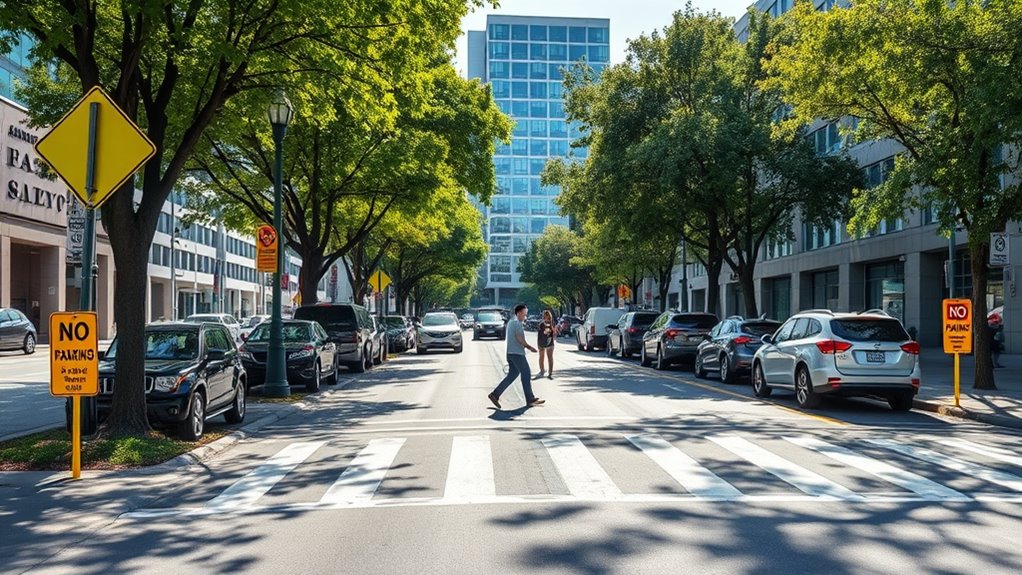
As California implements its Daylighting Law, drivers need to be aware of new parking regulations near crosswalks that aim to enhance pedestrian safety.
Effective January 1, 2025, this law prohibits parking within 20 feet of any marked or unmarked crosswalk and within 15 feet of a crosswalk with a curb extension. These regulations improve visibility for drivers, allowing them to see pedestrians more clearly and reducing pedestrian crashes by up to 30%. Additionally, California's pedestrian fatality rate is nearly 25% higher than the national average, underscoring the urgency of these new measures. The role of a traffic lawyer can be crucial in advising drivers on compliance with these new laws, helping to navigate potential legal issues.
While enforcement may vary by city, it's essential to comply, as fines will begin in some areas on March 1, 2025. To avoid penalties, measure 20 feet roughly as one large car length.
Stay informed to contribute to safer streets for everyone.
Increased Minimum Liability Insurance Coverage for Drivers
With the rising number of vehicles on the road, understanding the new minimum liability insurance coverage is vital for drivers in several states.
States like California and Utah have increased their minimums to 30/60/15 and 30/65/25, respectively, effective January 1, 2025. North Carolina raised its limits to 50/100/50, while Virginia's new coverage stands at 50/100/25.
These changes could lead to higher premiums, especially for those with minimal coverage. However, maintaining adequate liability insurance provides better financial protection in the event of an accident.
Higher premiums may arise for minimal coverage, but sufficient liability insurance offers crucial financial protection during accidents.
To mitigate costs, shop around for competitive rates that meet the new requirements. Being aware of these updates guarantees compliance and enhances your financial security on the road.
Colorado Car Seat Law: Updated Requirements for Child Safety
Starting January 1, 2025, new updates to Colorado's child passenger safety law require drivers to be more vigilant about proper car seat usage.
Under the revised law, children under 2 years old and under 40 pounds must remain in rear-facing car seats, which are safer during crashes.
For children aged 2 to 4 years who weigh at least 20 pounds, forward-facing seats with five-point harnesses are now mandatory.
Additionally, kids must use booster seats until age 9 or until they exceed 40 pounds.
Non-compliance can result in fines, emphasizing the necessity for proper installation according to manufacturer guidelines.
Take advantage of free inspections by certified technicians to guarantee safety and adherence to these updated regulations.
Stricter Impoundment Periods for Repeat Offenders in California

California is tightening the reins on traffic violations by implementing stricter vehicle impoundment periods for repeat offenders. This move aims to enhance road safety and deter illegal driving behaviors.
Here are key points to take into account:
- Repeat offenders may face longer impoundment durations, making it more costly to reclaim their vehicles.
- The law could escalate penalties to felony charges for those who repeatedly violate traffic regulations.
- Studies indicate vehicle impoundment effectively reduces recidivism among drivers with suspended or revoked licenses.
As California pushes for stricter enforcement measures, understanding these new laws is essential for all drivers.
Staying informed can help you avoid significant financial burdens and contribute to safer roads for everyone.
Hands-Free Driving Law: Prohibitions on Handheld Phone Use
As states increasingly recognize the dangers of distracted driving, hands-free driving laws have emerged as a critical measure to enhance road safety. Over 21 states now prohibit all handheld device use, including calling and texting.
These laws, often enforced as primary offenses, allow police to stop drivers solely for handheld use, promoting compliance. Importantly, many drivers support this legislation, reflecting a growing concern about distracted driving.
Exemptions exist for emergency responders and certain commercial drivers, but the focus remains on reducing fatalities linked to distracted behavior, which accounted for 7.8% of traffic deaths in 2022.
Clear legal frameworks and appropriate penalties are essential for the effectiveness of these laws, driving a cultural shift towards safer driving practices.
Proposed Speed Limiter Mandate for Heavy-Duty Trucks
While the Federal Motor Carrier Safety Administration (FMCSA) pushes for a mandate requiring heavy-duty trucks to be equipped with speed limiters, the proposal aims to enhance road safety by curbing truck speeds.
Here's what you should know:
- The rule targets trucks over 26,001 pounds, potentially reducing crash rates considerably.
- Studies indicate that speed limiters could save hundreds of lives annually by decreasing speed-related incidents.
- Countries like Japan and Australia have successfully implemented similar technologies, showcasing safety benefits.
Although the proposal is expected in May 2025, the trucking industry is divided, with concerns about congestion and operational impacts.
As public feedback shapes the final rule, it's essential to stay informed about how this mandate could affect road safety and your driving experience.
Automatic Emergency Braking Systems Now Required for Trucks

The push for enhanced safety measures on the road continues with the proposed mandate for Automatic Emergency Braking (AEB) systems on heavy-duty trucks. This rule aims to greatly reduce rear-end collisions and enhance pedestrian safety.
AEB systems utilize advanced sensor technologies, including cameras, radar, and lidar, to proactively detect potential collisions. The mandate, following the Bipartisan Infrastructure Law, will apply to trucks over 10,000 pounds, requiring compliance within three to four years, depending on vehicle class.
While AEB systems promise to lower fatalities and injuries, concerns about false activations and system reliability persist. Additionally, no retrofitting of existing trucks will be necessary, simplifying implementation.
The final rule is anticipated in 2025, marking a pivotal shift in truck safety standards.
Enhanced Penalties for Sideshow Participation and Organization
In light of rising safety concerns and community disruptions, San Francisco has implemented enhanced penalties for those involved in sideshows, targeting both participants and organizers.
These new laws aim to deter reckless behavior and restore safety in neighborhoods. Here's what you need to know:
- Increased Fines and Jail Time: Participants face reckless driving charges, with fines up to $1,000 and potential jail sentences.
- Vehicle Seizures: Authorities can impound vehicles for over 30 days, permanently if convicted.
- License Suspensions: Expect possible driver's license suspension for those caught participating.
With coordinated regional law enforcement efforts, the city is leveraging technology like drones and surveillance cameras to monitor sideshows effectively, ensuring accountability while prioritizing community safety.
Updates to Drug and Alcohol Clearinghouse Enforcement
Drivers need to be aware of significant updates to the Drug and Alcohol Clearinghouse enforcement that will reshape how violations are managed.
Starting November 18, 2024, state driver licensing agencies will gain direct access to the Clearinghouse, requiring them to conduct queries for CDL applications and renewals. This change prevents you from obtaining or renewing a CDL if you have unresolved violations.
If you're listed as "prohibited," your CDL will be revoked or downgraded until you complete the mandatory return-to-duty process.
These updates aim to enforce stricter compliance nationwide, making it harder to conceal violations from employers or licensing agencies.
Adoption of Advanced Traffic Management Technologies
As urban populations continue to swell, adopting advanced traffic management technologies becomes essential for effective transportation systems.
These innovations enhance efficiency and improve road safety, benefiting you as a driver. Here are some key features:
- AI Integration: Analyzes real-time traffic conditions, adjusting signal timings to optimize flow.
- Predictive Analytics: Anticipates congestion hours in advance, allowing proactive measures to prevent jams.
- IoT Solutions: Connects vehicles and infrastructure, improving communication and safety.
These technologies utilize cameras and sensors to gather accurate data, enabling dynamic traffic optimization.
With the global urban population on the rise, efficient traffic management systems are critical for minimizing congestion and supporting smart city initiatives.
Embracing these advancements can lead to smoother journeys for everyone.
Conclusion
Staying informed about these new traffic laws is essential for your safety and compliance. Ignoring them could lead to fines that pile up like a mountain of debt. By understanding regulations like California's Daylighting Law and Colorado's updated car seat requirements, you not only protect yourself but also contribute to safer roads for everyone. Embracing these changes guarantees you're not just another driver but a responsible participant in the evolving landscape of traffic safety.
